

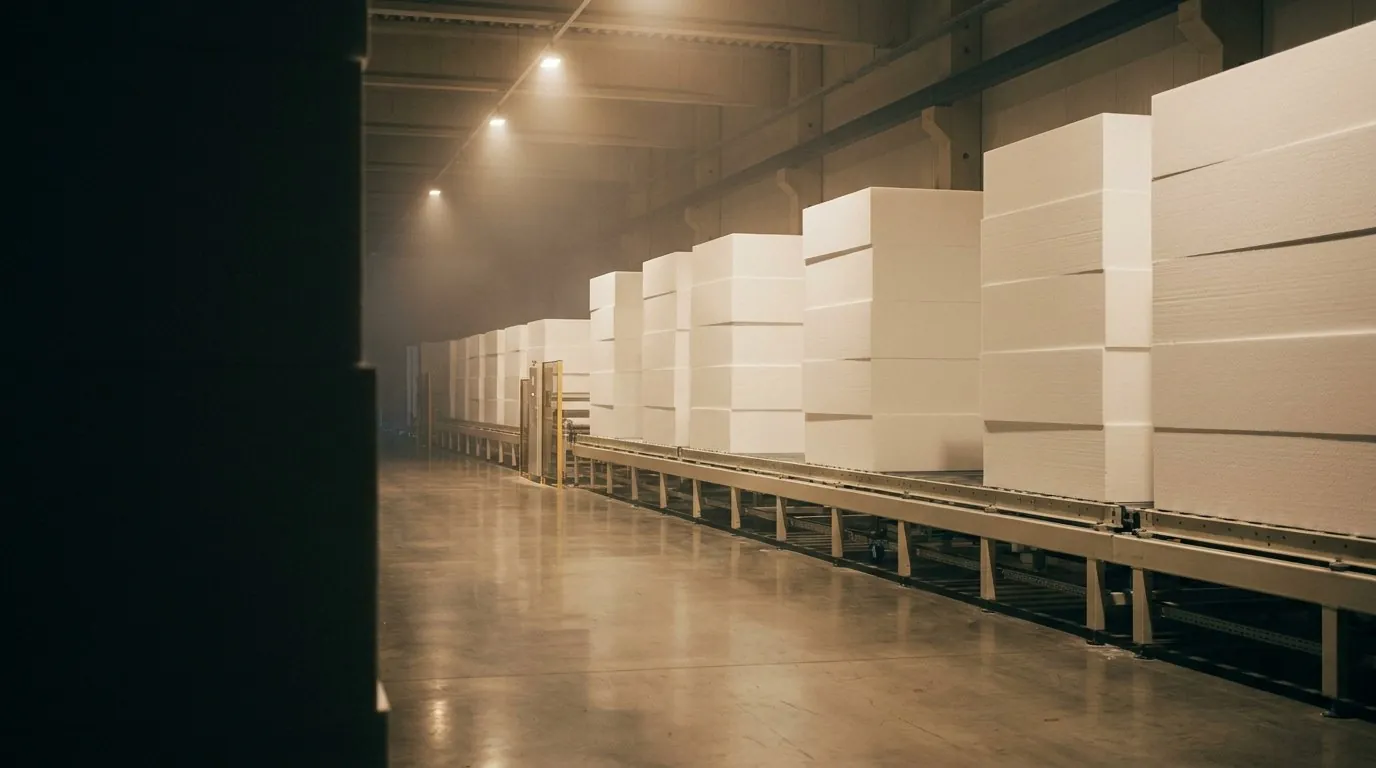
“Foam instead of gypsum” is one of the most-searched cladding questions in Egypt and the Gulf — and it's usually asked as if one material must win. The truthful answer is that gypsum and coated EPS solve different problems, and most bad outcomes come from putting either one in the wrong place.
Where gypsum genuinely belongs
Indoors, gypsum has earned its place: ceiling cornices, coves and medallions in dry, conditioned rooms. It's economical, plasterers know it, and a skim finish blends it seamlessly into the ceiling. If the job is an interior ceiling in a dry room, gypsum remains a perfectly rational choice — nothing in this article argues otherwise.
Why gypsum fails outdoors
Gypsum is water-soluble. Facade humidity, rain, and condensation soften its surface, stain it, and crumble arrises within seasons, not decades. It's also brittle — thermal movement on a sun-baked elevation opens cracks along joints — and heavy enough that large exterior profiles need mechanical fixing into the wall. That's why you see exterior gypsum work repainted and patched every year or two until it's replaced.
What coated EPS changes
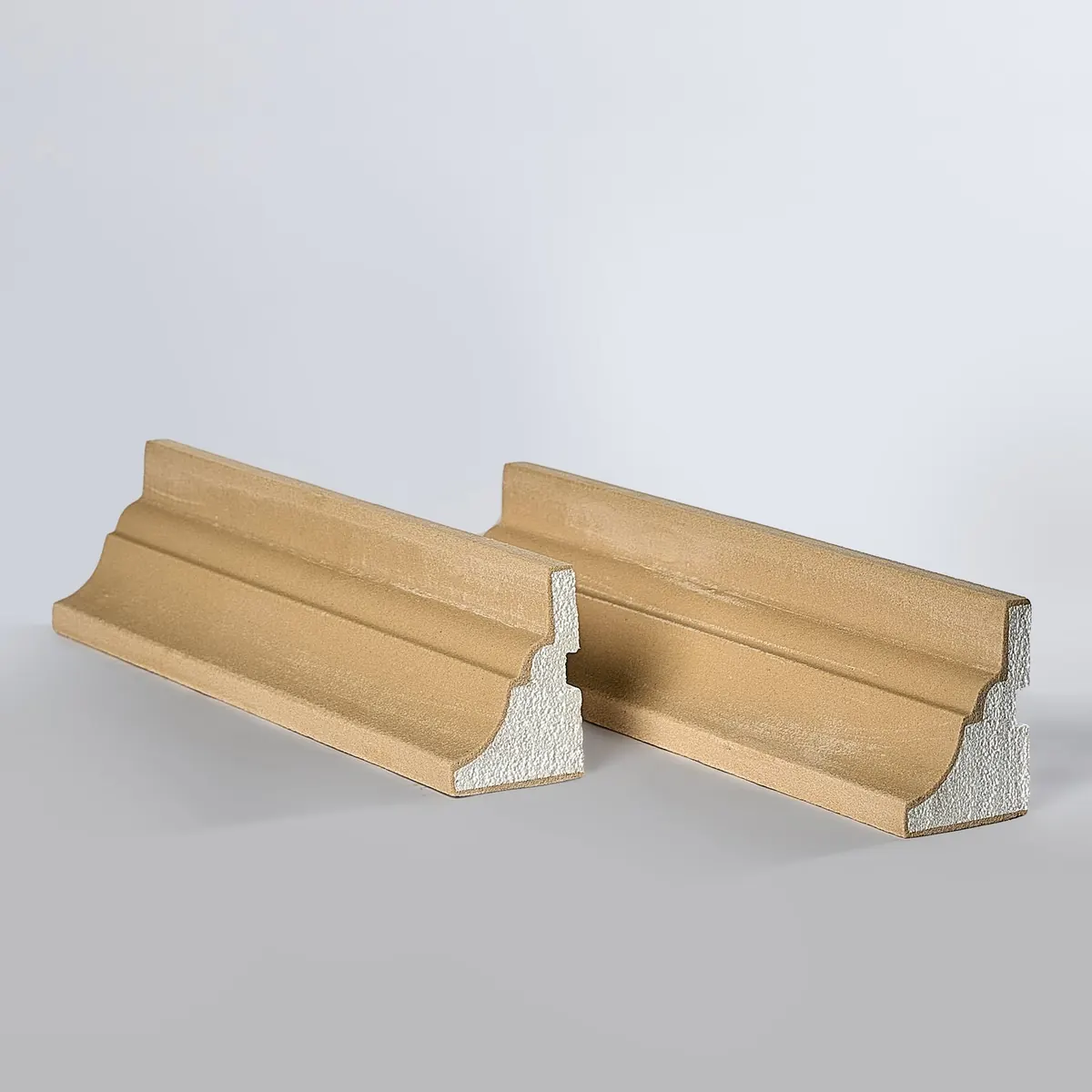
A coated-EPS cornice puts a weatherproof acrylic shell around a closed-cell core that doesn't absorb water. It weighs kilograms instead of tens of kilograms — a full facade runs 3–8 kg/m² installed — bonds with adhesive plus pins, and flexes with thermal movement instead of cracking. And because profiles are CNC-cut rather than mold-cast, a one-off custom section costs what a repeated one does. For exterior cornices, string courses, window surrounds and full elevations, that combination is why the market moved.
The decision in one line
Dry interior ceiling → gypsum is fine. Anything exposed to weather → coated EPS. If a supplier proposes gypsum outdoors, or bare uncoated foam anywhere, both answers are wrong for the same reason: the material isn't protected from what the location does to it. Side-by-side material data lives on the specs page, and you can send a drawing for a per-profile quotation.