

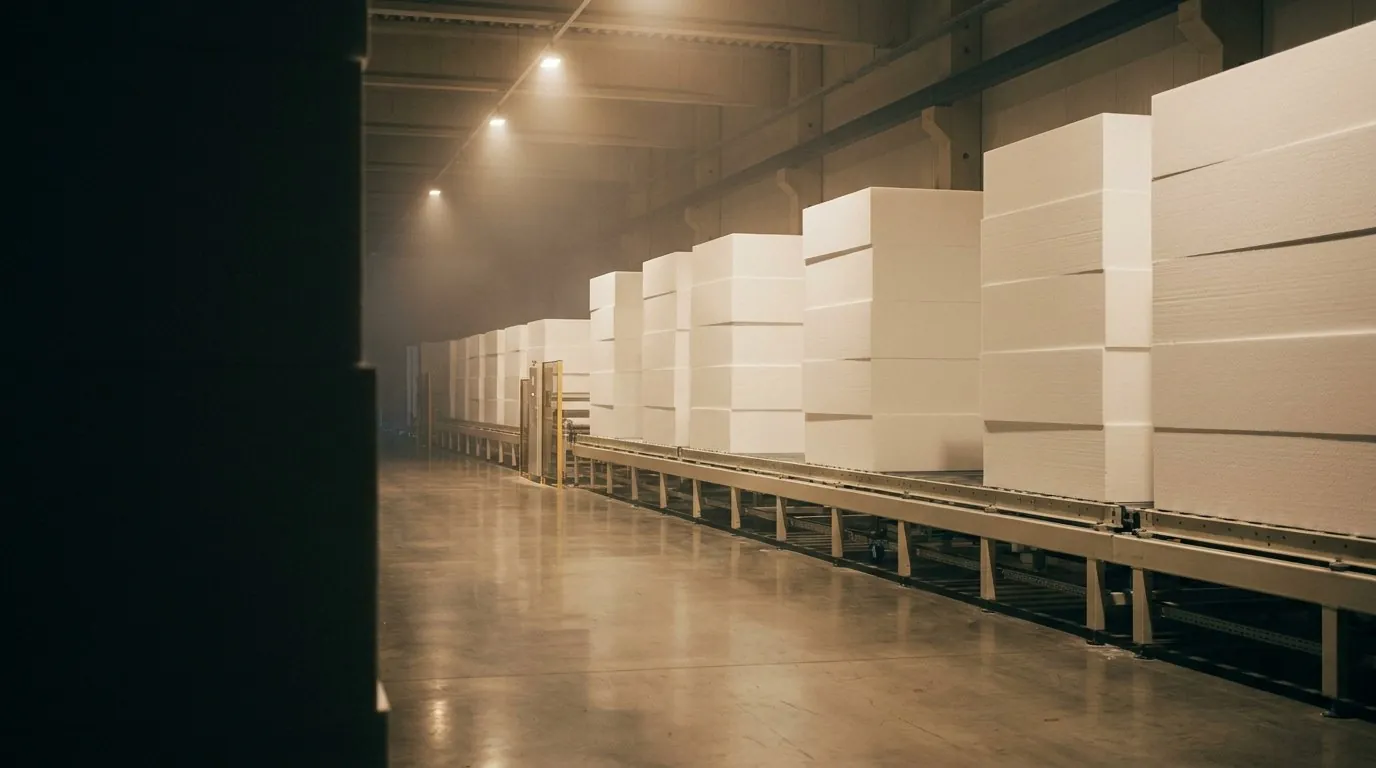
“How long does foam cladding last?” is one of the most-asked questions about the material — usually right after someone has seen bare polystyrene crumble on a construction site. The honest answer has two halves: unprotected EPS does not belong outdoors, and coated EPS is a different material in practice. Everything below is about that difference.

What actually ages EPS?
The core material is chemically inert — it does not rot, and published studies show protected EPS retaining its insulation value and over 90% of its strength through tests simulating 30–50 years of service. Only two things genuinely attack it: UV light, which yellows and embrittles a bare surface, and mechanical impact, because the raw foam is soft. Neither reaches the core of a coated system.
The shell is the answer to the lifespan question
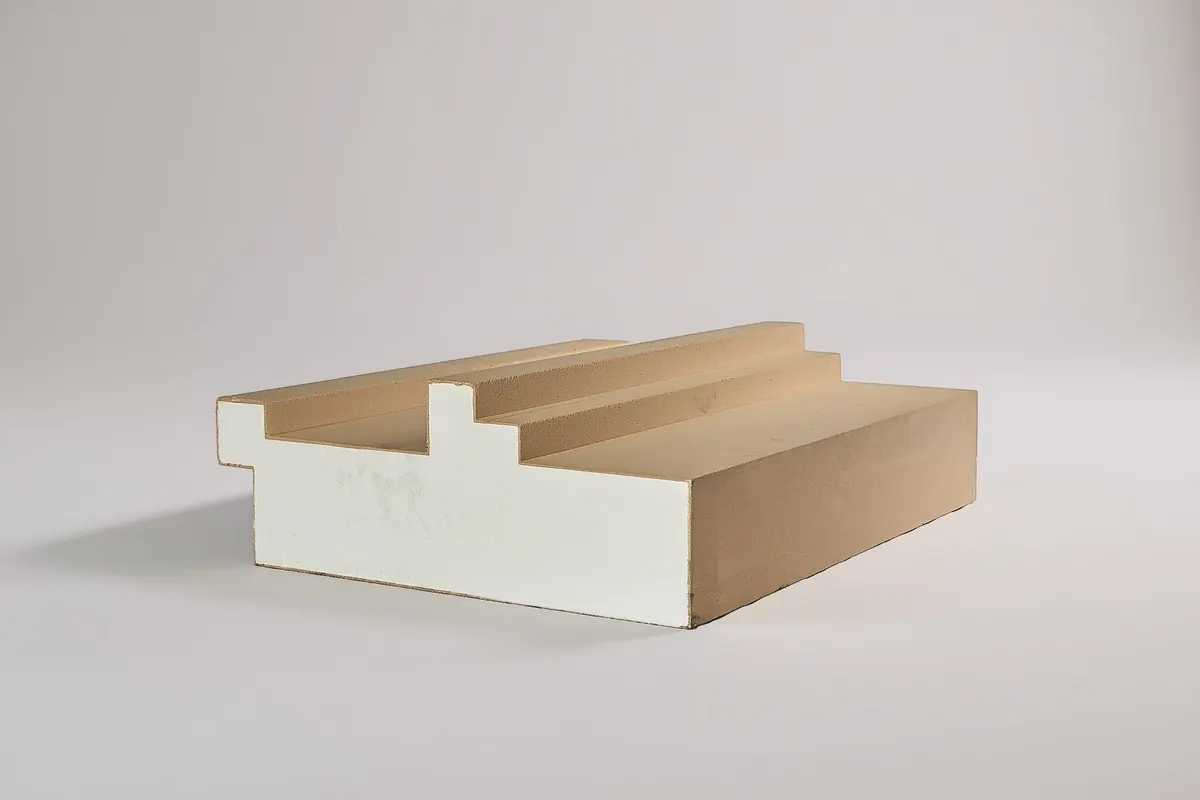
A CLADECO® element carries a hard, meshless 3–4 mm acrylic-polymer shell over the EPS core. The cured shell is UV-stable, resistant to weathering, cracking and algae growth, and takes a 10-joule impact without damage (EN 13497). Water barely enters it — 3.67% absorption against the 6% standard maximum (EN 1062-3) — and the closed-cell core itself absorbs almost nothing. Service temperature is rated from −30 to +80°C, which comfortably covers an Egyptian summer facade.
Why do some “foam facades” fail in a year or two?
Because not all foam work is the same system. The failures people see — hairline cracks, chalky surfaces, corners breaking off — almost always trace back to low-density board, thin site-applied render, or mesh coats done by hand. A factory-coated element with a dense core (CLADECO® uses 15–35 kg/m³ EPS, machine-coated and QC-checked before dispatch) removes exactly those variables. When you compare quotes, ask what the density is and where the coating is applied — the answers predict the lifespan.
What maintenance does it need?
The same as any painted render: periodic inspection and a wash-down; repainting on the owner's normal decoration cycle. If an element is chipped by impact, it is repaired on the wall with the same factory acrylic and repainted — no crane, no replacement unit. That repairability is a quiet advantage over stone and GRC, where damage usually means swapping the piece.
The short answer
Protected, coated EPS is a multi-decade material — the published range for protected EPS is 30–50+ years — and every CLADECO® supply is backed by a 10-year product warranty from Insutech. The full data sheet values are on the specs page, and the installation sequence shows the details that keep water out at joints and openings.