

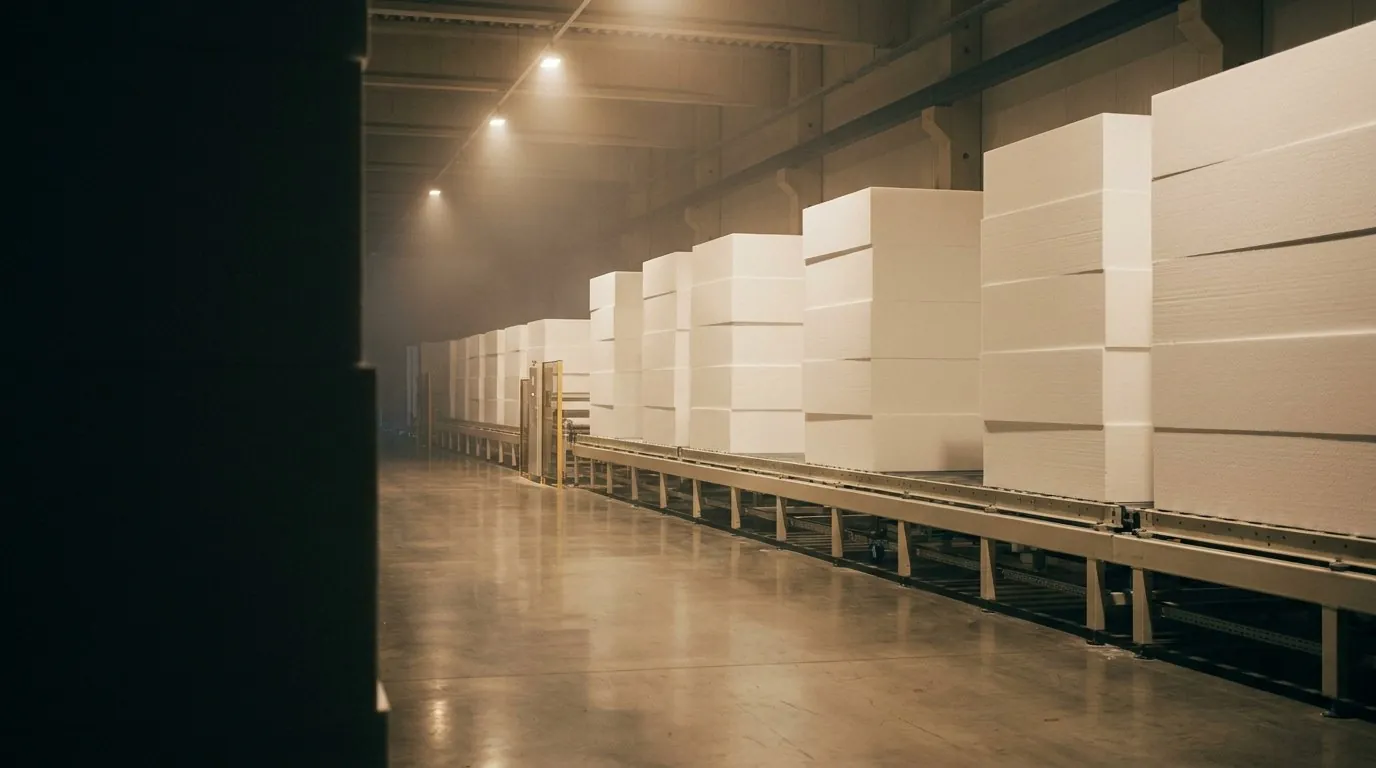
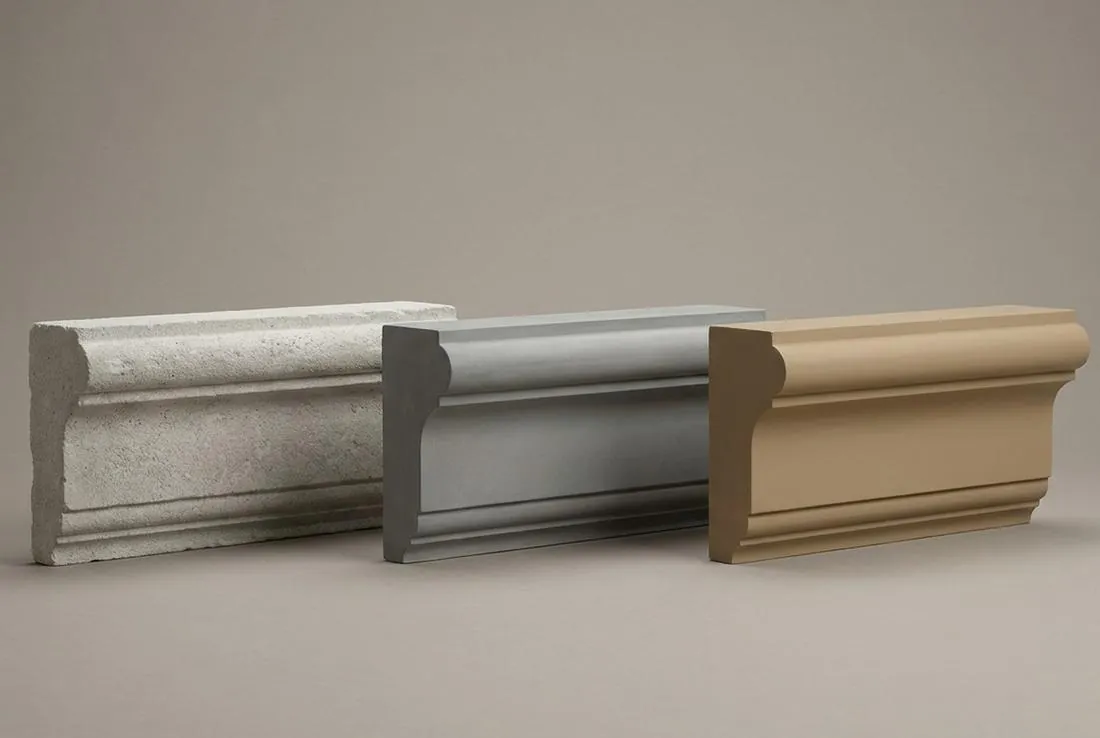
Cornices, columns, keystones and full facade panels are traditionally executed in GRC (glass-reinforced concrete) or natural stone. CLADECO® produces the same profiles as CNC-machined EPS with a hard acrylic shell. The geometry is identical — what changes is weight, how the piece reaches the wall, and cost. This article walks through the differences that matter at specification stage.
Weight is the root difference
Material density drives everything downstream. GRC runs at roughly 1,900–2,100 kg/m³ and natural stone at 2,200–2,800 kg/m³, while the EPS core of a CLADECO® element is 15–35 kg/m³. Installed, a coated-EPS facade weighs about 3–8 kg/m² against ~35–55 for GRC and ~80–95 for stone. That difference cascades: lighter elements need no steel sub-frame, no crane time, and place no meaningful load on the structure — which is also why they suit renovation work on existing buildings.
Installation
GRC is mechanically fixed to a steel or aluminum frame, with crane lifts for larger panels. Stone is anchored with cramps and dowels, crane and masons on site. CLADECO® elements are set by hand by a one- or two-person crew using a cement-based adhesive plus mechanical pins — the sequence is covered step by step on the installation page. Fewer trades and no lifting plant is where most of the program savings come from.
Thermal behavior
EPS is an insulation material before it is a cladding material: core conductivity is 0.032–0.040 W/m·K, versus ~0.5–1.0 for GRC and ~1.3–5.4 for stone. Applied as a continuous facade, the cladding itself upgrades the envelope rather than simply decorating it.
Design freedom and lead time
GRC and cast stone are mold-bound — every new profile carries tooling cost and a minimum order. CLADECO® profiles are CNC-cut directly from the digital drawing, so one-off pieces, radius work and non-repeating elevations carry no mold premium, and typical lead time is 2–6 weeks from approved shop drawings.
Cost, on a like-for-like basis
Indexed on total installed cost — material, labor and plant — natural stone sits at 1.0×, GRC at ~0.7–0.9×, and coated EPS at ~0.3–0.5×. Material-only quotes understate the gap, because weight is what drives the frame, the crane and the program.
Where GRC or stone still make sense
The comparison is not one-sided. GRC and natural stone are non-combustible (Class A1), which some briefs specifically require; heritage work may mandate genuine stone; and both have long track records in exposed public-realm applications at ground level. Where the brief is decorative facade work at height, executed fast, at low weight and controlled cost, coated EPS is the stronger fit.