

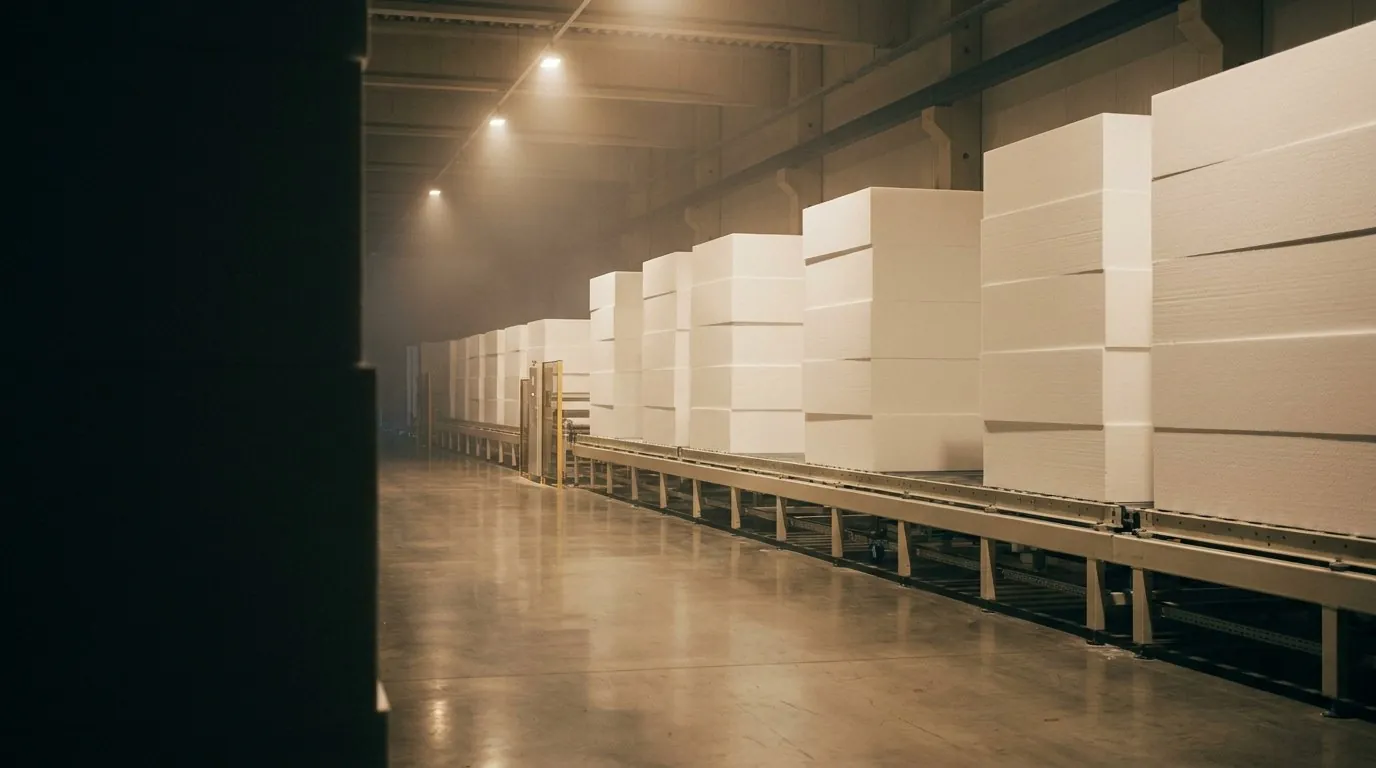
Coated EPS is an architectural cladding material made of a CNC-machined expanded-polystyrene (EPS) core finished with a hard, weatherproof acrylic-polymer shell. The result is a paint-ready facade element at 3–8 kg/m² installed — the geometry of cast stone or GRC at a fraction of the weight, produced without molds.
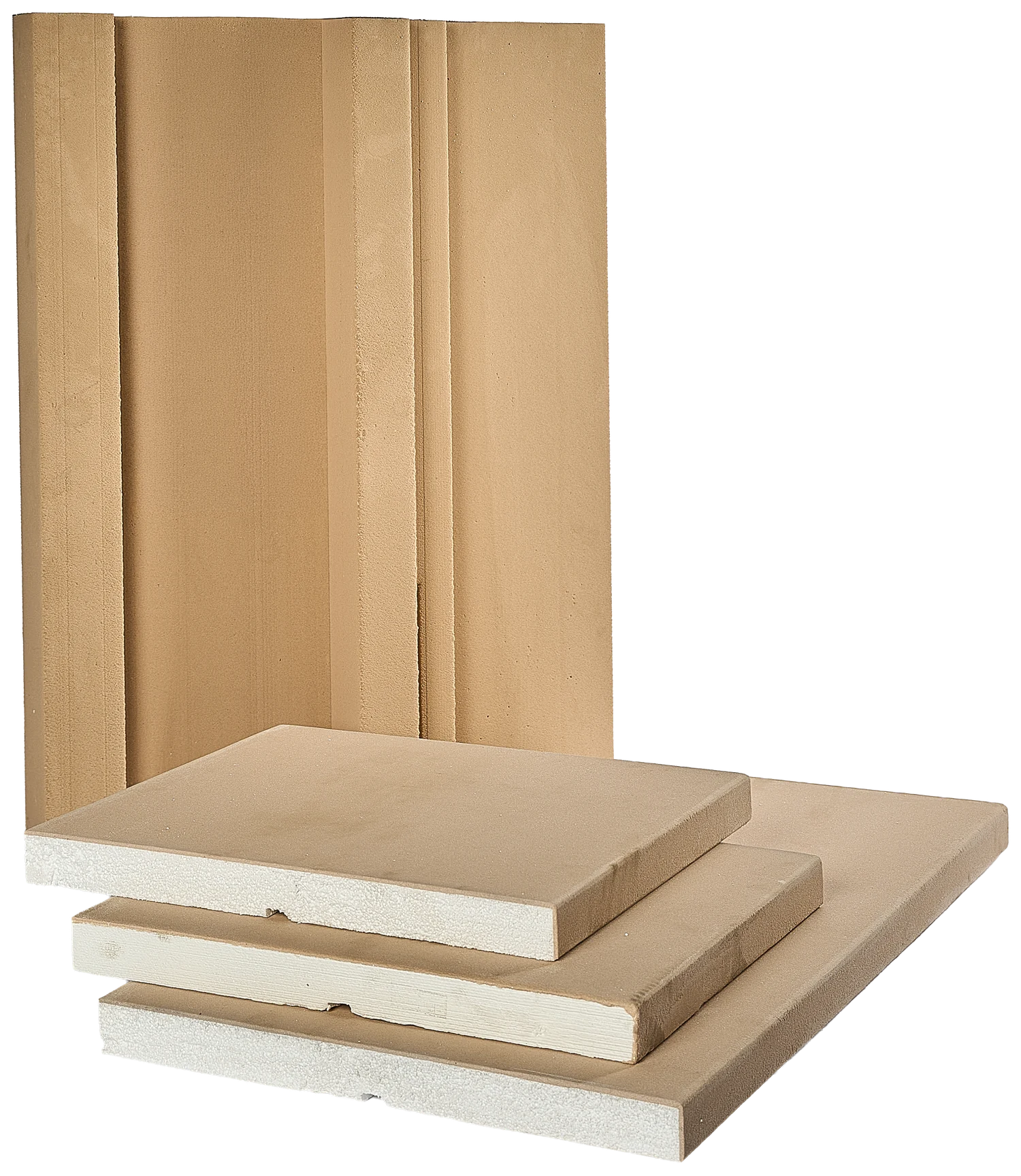
How is coated EPS made?
Production has two stages. First, a dense EPS block (15–35 kg/m³) is CNC-machined directly from the digital drawing — cornice, column, keystone, window surround or full facade panel — with no mold, which is why one-off profiles cost the same as repeated ones and lead time stays at 2–6 weeks. Second, the cut piece passes through a multi-coat acrylic-polymer cycle, building a meshless shell of 3–4 mm that cures into the hard, weather-facing surface. CLADECO® applies this coating in the factory, machine-controlled and QC-checked before dispatch — the single biggest difference from site-rendered “foam” work.
Coated EPS properties at a glance
| Property | Value | Reference |
|---|---|---|
| Core density | 15–35 kg/m³ | EPS, CNC-machined |
| Installed weight | 3–8 kg/m² | vs ~35–55 GRC, ~80–95 stone |
| Shell | 3–4 mm acrylic polymer, meshless | factory-applied |
| Thermal conductivity (core) | 0.032–0.040 W/m·K | EN 12667 |
| Water absorption (shell) | 3.67% (max standard 6%) | EN 1062-3 |
| Impact resistance | 10 J — no damage | EN 13497 |
| Adhesion to substrate | ≥313 kPa | EN 13494 |
| Service temperature | −30 to +80°C | — |
| Reaction to fire | C-s2, d0 (system) | EN 13501-1 |
| Typical lead time | 2–6 weeks | from approved drawings |
What is coated EPS used for?
Two families of work. Decorative elements — cornices, columns, capitals, keystones, window surrounds, sills, string courses, balustrade profiles — and full facade panels that clad entire elevations while insulating them. Because the installed weight is negligible, it suits both new construction and renovation over existing masonry, fixed with cement-based adhesive plus mechanical pins and no crane.
Coated EPS vs the alternatives
Against GRC and natural stone, the differences concentrate in weight, program and cost: no steel sub-frame, hand installation in days, and ~0.3–0.5× installed cost against a stone baseline of 1.0×. The trade-offs are equally clear — the core is combustible (C-s2, d0 as a system; A1 briefs call for GRC or stone) and the material is decorative, not structural. The full side-by-side lives in the comparison article and on the specs page; durability has its own article.